
This article breaks down the official classification behind heavy labour, lists the jobs that actually qualify, and covers what it takes to succeed in these roles. Whether you're a job seeker weighing a physical career or an employer trying to hire correctly, this guide is for you.
Key Takeaways
- Heavy labor is defined by specific lifting thresholds, not job titles or gut feel
- Only about 6.2% of U.S. jobs meet the "heavy" strength classification
- Construction, material moving, and manufacturing roles account for most heavy labor positions
- Safety training and proper technique reduce injury risk
- Staffing agencies like Confident Staffing connect qualified candidates with heavy labor employers
What Is Heavy Labour? Understanding the Official Classification
What Is Heavy Labor? Understanding the Official Classification
Heavy labor isn't a vibe. It's a measurable standard set by the U.S. Bureau of Labor Statistics Occupational Requirements Survey (ORS), which tracks how much weight a job requires workers to lift, carry, push, or pull, and how often.
The Strength-Based Classification Tiers
The ORS breaks jobs into five strength tiers based on how frequently weight is handled:
| Tier | Occasional | Frequent | Constant |
|---|---|---|---|
| Sedentary | up to 10 lb | negligible | negligible |
| Light | 11-25 lb | 1-10 lb | negligible |
| Medium | 26-50 lb | 11-25 lb | 1-10 lb |
| Heavy | 51-100 lb | 26-50 lb | 11-25 lb |
| Very heavy | over 100 lb | over 50 lb | over 25 lb |

"Occasional" means up to a third of the workday. "Frequent" is up to two-thirds. "Constant" is more than two-thirds. A job only qualifies as heavy if it hits these thresholds, not if the work is simply tiring.
How Common Is Heavy Work, Really?
According to the 2025 BLS Occupational Requirements Survey, the national breakdown looks like this:
- Sedentary: 30.3%
- Light: 33.7%
- Medium: 29.1%
- Heavy: 6.2%
- Very heavy: 0.7%
That's a small, specialized segment of the workforce, but misclassifying it still creates hiring and compliance risk.
Heavy Labor vs. Labor-Intensive Work
These terms get mixed up constantly. "Labor-intensive" describes work requiring lots of human effort relative to machinery — think data entry or retail stocking. It doesn't always meet the 51+ pound occasional threshold. Heavy labor is a specific strength classification; labor-intensive is a broader economic description.
This distinction matters practically. Heavy labor classification affects workers' comp categorization, job posting language, and legally required physical demand disclosures. Get it wrong, and employers risk mismatched hires or compliance headaches.
Jobs That Qualify as Heavy Labour
Jobs That Qualify as Heavy Labor
Not every physical job clears the heavy bar. Here's where the numbers actually land, based on BLS's 2025 occupation-level data.
Construction and Extraction
Construction laborers regularly lift materials like cement bags and plywood sheets weighing 50 lb or more for over a third of the workday, according to BLS strength-level data. Roles here include:
- General laborers
- Ironworkers
- Roofers
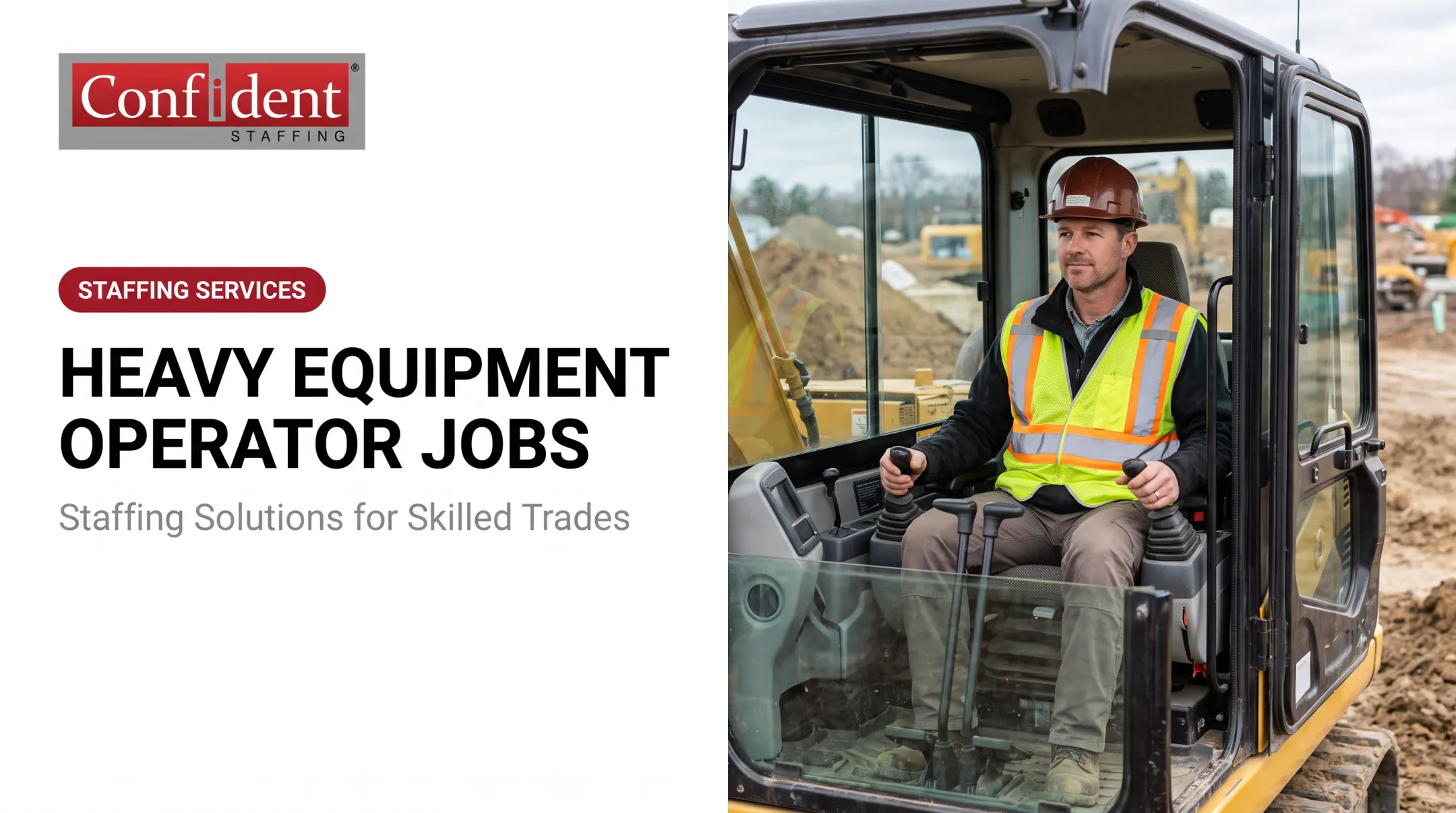
- Operating engineers and equipment operators (41.9% heavy-strength share)
Material Moving and Transportation
- Freight handlers
- Forklift operators handling heavy loads
- Warehouse laborers (25.2% heavy-strength share for hand laborers and material movers)
Manufacturing and Industrial
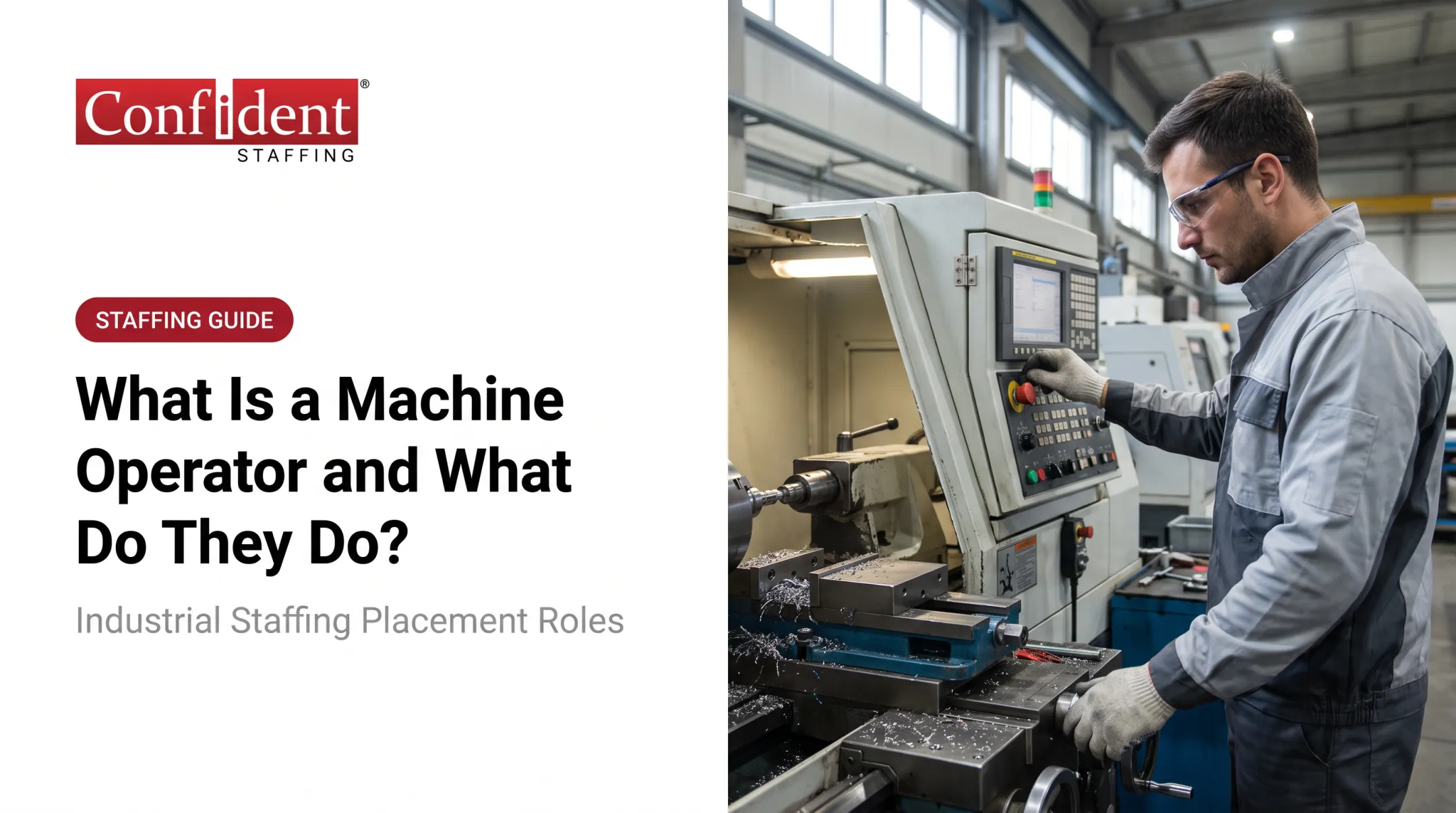
- Machine operators
- Assembly line heavy-lift positions
- Production laborers
- Butchers and meat cutters top this category at 68.5% heavy-strength share

Agriculture, Landscaping, and Outdoor Labor
Roles that often qualify include:
- Field workers
- Groundskeepers
- Landscape crews
These jobs involve sustained lifting of soil bags, equipment, and cut materials. The work rarely lets up during a shift, which pushes many roles into frequent or constant heavy-lifting territory.
Installation, Maintenance, and Repair
Heavy-strength shares in this group include:
- Highway maintenance workers (52.1%)
- Aircraft mechanics (49.8%)
- Plumbers (29.9%)

Confident Staffing places candidates into many of these categories — construction crews, production roles, and industrial positions — across Oregon and Washington, matching workers to employers who need this specific physical capability.
Skills and Qualifications for Heavy Labour Jobs
Skills and Qualifications for Heavy Labor Jobs
Most heavy labor roles don't require a degree. What they demand instead:
- Physical stamina to sustain repeated lifting across a full shift
- Strength and endurance, particularly for constant or frequent heavy loads
- Reliability — showing up consistently matters more in these roles than almost any other trait
- Safety discipline — following protocols without shortcuts
Certifications That Help
While not always mandatory, these credentials boost employability:
- OSHA 10 or 30-hour Outreach cards — foundational safety training recognized industry-wide
- Forklift certification — required by OSHA for any powered industrial truck operation
- Equipment operation licenses — for cranes, heavy machinery, or specialized tools
Employers value teamwork and coachability just as much as raw strength. Someone who lifts correctly and communicates on a crew often outperforms someone who's simply strong but careless.
Safety Considerations in Heavy Labour Work
Safety Considerations in Heavy Labor Work
Heavy labor carries real injury risk. In 2024, BLS recorded 568,150 days-away-from-work cases involving sprains, strains, or tears across all private industry. Overexertion consistently ranks among the top injury causes in transportation and material-moving occupations.
Industry injury rates (per 100 full-time workers, 2024 BLS data):
| Industry | Total Recordable | DART |
|---|---|---|
| Construction | 2.2 | 1.3 |
| Manufacturing | 2.7 | 1.7 |
| Warehousing | 4.8 | 4.1 |

Standard Safety Practices Employers Should Provide
- Proper lifting technique training (using the "power zone" between mid-thigh and mid-chest)
- Personal protective equipment suited to the specific task
- Ergonomic equipment to reduce strain: dollies, lift-assist devices, adjustable workstations
- Clear job descriptions that accurately state physical demands
Employers carry real responsibility here. Misclassifying a job's physical demands risks injury and can trigger liability and workers' comp disputes.
Finding Heavy Labour Jobs and Qualified Workers
Finding Heavy Labor Jobs and Qualified Workers
For job seekers, matching your physical capability to the right role starts with reading job postings carefully. Look for specific weight and frequency language rather than vague terms like "physically demanding."
For employers, sourcing reliable heavy labor talent takes time most hiring managers don't have. That's where a staffing partner earns its keep.
Confident Staffing offers:
- Temporary staffing for short-term construction, manufacturing, and industrial needs
- Temp-to-hire with a 560-hour evaluation window before a no-fee direct hire decision
- Direct-hire recruiting nationwide for permanent heavy labor positions
Job seekers: Explore heavy labor openings at [email protected].
Employers: Fill physically demanding roles through [email protected] or call the Medford office at 541-773-8888.
Frequently Asked Questions
What does labor intensive mean?
Labor intensive refers to work requiring significant human effort relative to machinery or capital investment. It doesn't necessarily meet the BLS heavy-work strength threshold. A job can be labor intensive without qualifying as heavy labor.
Is labor the same as work?
Not quite. "Labor" typically refers to physical or manual effort, especially in employment contexts, while "work" is a broader term covering any task or job, physical or otherwise.
What is considered heavy lifting in a job description?
Under BLS standards, heavy lifting means 51-100 lb occasionally, 26-50 lb frequently, or 11-25 lb constantly throughout a shift. Anything below those thresholds falls into the medium or light tiers.
Can you get a heavy labor job with no experience?
Yes. Many entry-level heavy labor roles offer on-the-job training and prioritize physical readiness and reliability over prior experience. Employers often value a strong work ethic more than a résumé.
Do heavy labor jobs pay more than light or medium work jobs?
It varies by industry. Pay differences typically reflect skill level, certifications, and job risk rather than physical demand alone. A certified equipment operator often earns more than an uncertified general laborer, despite similar lifting requirements.
How do staffing agencies help with heavy labor hiring?
Agencies like Confident Staffing screen candidates for job fit, reliability, and relevant experience, matching them to appropriate roles. This saves employers the time and risk of sorting through unqualified applicants on their own.