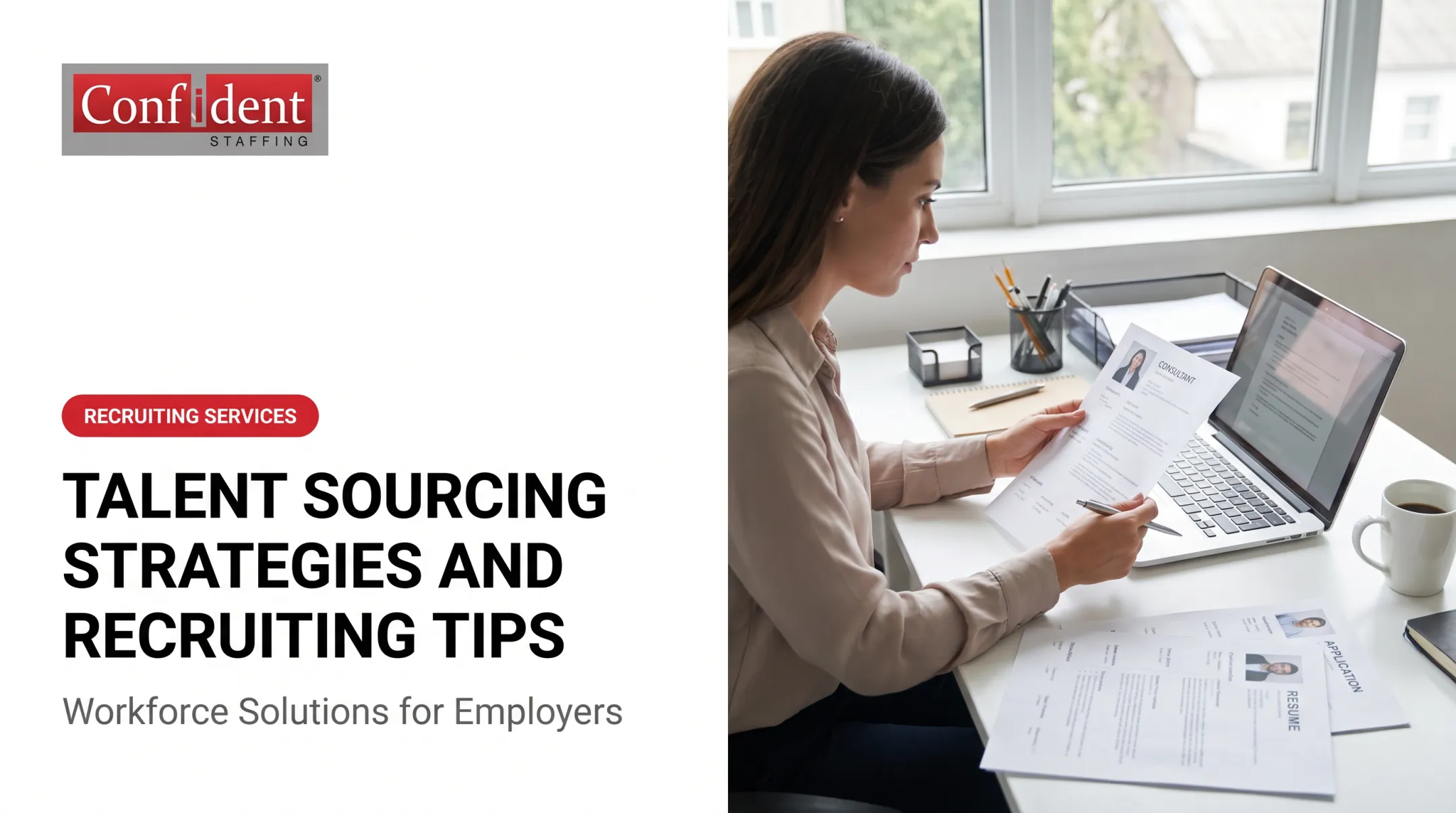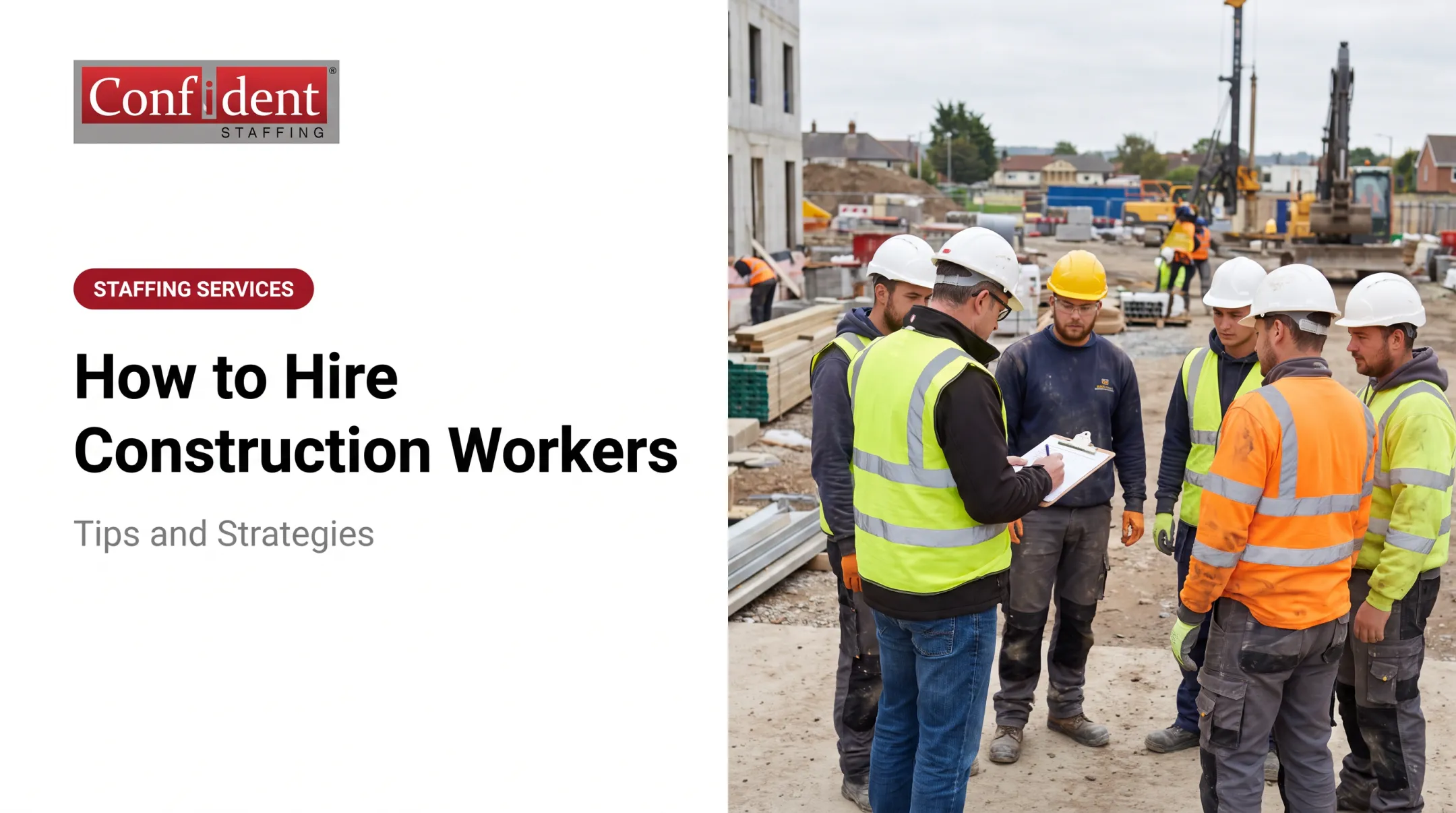

Many businesses struggle with high turnover costs, slow screening processes, and mismatched hires that drain time and morale. A bad hire isn't just frustrating — SHRM estimates the full cost of recruiting, hiring, and onboarding a replacement can reach $240,000 for some roles.
This guide walks through defining your hiring needs, sourcing candidates effectively, screening for real fit, hiring quickly without cutting corners, and onboarding new hires so they actually stay.
Key Takeaways
- A clear job profile beats a vague job posting every time
- Multiple sourcing channels outperform relying on one job board
- Structured interviews and skills testing cut down on bad hires
- Onboarding quality determines whether new hires stick around
- Staffing partners speed up hiring without lowering your standards
Define the Role and Ideal Candidate Before You Start Hiring
Vague job descriptions attract the wrong applicants. When a posting lists everything under the sun as "required," you'll either scare off good candidates or drown in resumes that don't fit.
SHRM's guidance is straightforward: keep titles simple, descriptions concise, and cut the jargon. Separate must-have qualifications from nice-to-have skills so qualified people don't self-select out.
Before writing the posting, nail down:
- The 3-5 skills that are truly non-negotiable
- Skills that are helpful but trainable on the job
- Which team members will weigh in on culture fit and technical needs
- Whether this is a temporary, temp-to-hire, or permanent role — this changes your entire hiring strategy
- A realistic wage range based on current market conditions, not last year's budget

Align on Expectations Before You Post
Candidates walk away from unclear or unreasonable job responsibilities more often than employers realize. BambooHR found that 56% of candidates would abandon an opportunity if expectations weren't clearly defined.
Involve a hiring manager and at least one team member in defining requirements. They'll catch gaps a job description template misses.
Where and How to Source Good Candidates
Relying on a single job board limits both reach and retention. Jobvite's research shows the gap plainly: only 14% of job-board hires stayed three years, compared to 47% of employee-referral hires. That retention gap tracks directly to sourcing channel.
Diversify your sourcing across:
- Employee referrals with conversion rates near 40% and hire times that can drop 40%
- Niche industry job boards for technical or specialized roles
- Social media, including LinkedIn, Facebook, and video platforms like YouTube
- Local networking events and professional associations
- Passive outreach to people who aren't job hunting but may welcome the right offer

Employer branding matters more than most companies realize here. Glassdoor found that employers raising their rating by 0.5 points saw 20% more job clicks and 16% more application starts. Reviews and culture content work as recruiting tools, not only PR.
Staffing partners help close that channel gap. Confident Staffing keeps an active pipeline through job postings, advertising, networking, membership sites, PPC campaigns, YouTube, and social platforms, so you reach candidates a single job-board search never surfaces.
For hard-to-fill technical or skilled roles, access to an already-screened pool can save weeks of front-end work.
Screening and Interviewing to Identify Truly Good Employees
Here's a statistic worth sitting with: organizations without a standardized interview process are 5 times more likely to make a bad hire, according to a Brandon Hall Group/Glassdoor study cited by SHRM. That gap is the difference between a hiring process that works and one that amounts to guesswork.
Build Structure Into Every Interview
Structured interviews reduce interviewer bias and inconsistency. Google's own research backs this up: structured interviewing with rubrics and standardized questions increases predictive validity compared to freeform conversations. It even saves interviewers time. Google found high-quality question guides save roughly 40 minutes per interview.
A solid screening process includes:
- Resume criteria tied directly to your must-have skills list
- Behavioral and situational questions asked consistently across candidates
- Role-specific skills assessments (technical tests, work samples, mock scenarios)
- Reference checks that probe for reliability and past performance patterns
- Background checks appropriate to the role's risk level

One caution: not every popular assessment predicts quality of hire well. SHRM notes that generic personality tests sometimes show an inverse correlation with performance, while role-specific tests, like a coding test for engineers or a mock sales pitch, correlate strongly. Match the assessment to the actual job.
Confident Staffing's candidates go through an extensive application and screening process before ever reaching a client, which means employers spend less time filtering out unqualified applicants and more time evaluating genuine fits.
How to Hire Employees Quickly Without Sacrificing Quality
Urgent openings don't have to mean rushed, risky hires—you can move fast without lowering your standards.
Strategies that work:
- Batch interviewing days — schedule multiple candidates back-to-back to compress your timeline
- Streamlined applications — cut unnecessary steps that cause qualified candidates to drop off
- Temp-to-hire arrangements — place someone quickly, evaluate real performance, then decide on a permanent offer
- Pre-screened talent pools — skip the sourcing phase by tapping a staffing partner's already-vetted candidates
Temp-to-hire is often the fastest path that still protects quality. You place a worker immediately, evaluate real on-the-job fit, then decide on a permanent offer. With Confident Staffing, the worker stays on the agency's payroll until you convert—after 70 days or 560 hours, you can hire them directly with no conversion fee.

Common mistakes when rushing:
- Skipping reference checks entirely to save a few days
- Failing to communicate clear expectations before day one
- Treating "fast" as an excuse to lower your screening standards
With batch interviews, lean applications, and a ready talent pipeline, speed becomes a process advantage—not a quality tradeoff.
Onboarding and Retaining the Employees You Hire
Hiring the right person is only half the job. Gallup research shows only 12% of employees strongly agree their company did a great job onboarding them. That gap costs companies talent they just spent weeks recruiting. BambooHR's 2025 research found 39% of new hires had second thoughts about their job during onboarding. The first few weeks can make or break retention before a new employee ever hits their stride. Strong onboarding includes:
- Clear, written expectations for the first 30-60-90 days
- An assigned mentor or "buddy" for questions that feel too small to ask a manager
- Regular check-ins, not just a single first-day orientation Gallup found employees who experience effective onboarding are 2.6 times more likely to be extremely satisfied with their workplace. Satisfaction is the strongest predictor of who stays. Retention work continues after day one. Protect the hire you just made with:
- Structured feedback at 30 and 90 days
- Clear growth paths tied to real responsibilities
- Early recognition when new hires deliver wins Pairing a solid hire with weak onboarding wastes the investment you just made in recruiting.

When to Bring in a Staffing and Recruiting Partner
Not every hiring need justifies building an in-house recruiting machine. Sometimes the smarter move is bringing in outside help.
Consider a staffing partner when you're facing:
- An urgent opening with no time to build a candidate pipeline from scratch
- A hard-to-fill technical or specialized role
- Limited internal recruiting bandwidth or expertise
- A need to test multiple candidates on the job before committing permanently
When those conditions show up, outside help often fills the gap faster than building capacity in-house. Confident Staffing covers temporary, temp-to-hire, direct-hire, and executive search placements, with particular depth in manufacturing, construction, engineering, government, and light industrial roles.
The firm matches candidates not only to job requirements, but to company culture and long-term business strategy—something generic job boards can't evaluate.
For direct-hire searches, Confident Staffing operates on a no-upfront-fee contingency model, meaning employers pay only after a successful placement. Roles paying more than $50,000 annually typically move to Confident Search Consultants, the firm's dedicated executive recruiting division. That contingency model is a low-risk way to test hiring support before committing to a retained search arrangement.
Frequently Asked Questions
How to hire a lot of employees quickly?
Combine batch interview days, streamlined applications, and a temp-to-hire staffing partnership to fill multiple roles at once. This approach fills volume needs without lowering your screening standards.
What makes someone a "good" employee beyond just skills?
Reliability, culture fit, and attitude often matter as much as technical qualifications. A skilled candidate who doesn't mesh with your team's working style can still become a difficult hire.
How long should the hiring process take?
SHRM's 2026 benchmark puts the median at 39 days for nonexecutive roles and 45 days for executive roles. Delays usually come from unclear job requirements or inconsistent interview scheduling.
Should small businesses use a staffing agency or hire on their own?
It depends on your internal bandwidth and how urgent the role is. If you lack dedicated recruiting staff or need someone fast, a staffing partner's existing candidate pool often outweighs the cost of doing it alone.
What are the biggest mistakes employers make when hiring?
Vague job descriptions, skipping structured interviews, and rushing final decisions top the list. Each mistake compounds the risk of a costly mis-hire.
How can I tell if a candidate will stay long-term?
Look at their career goal alignment with the role, patterns in past job tenure, and how naturally they engage with your team's culture during interviews. Referral hires, in particular, tend to have stronger three-year retention than job-board hires.